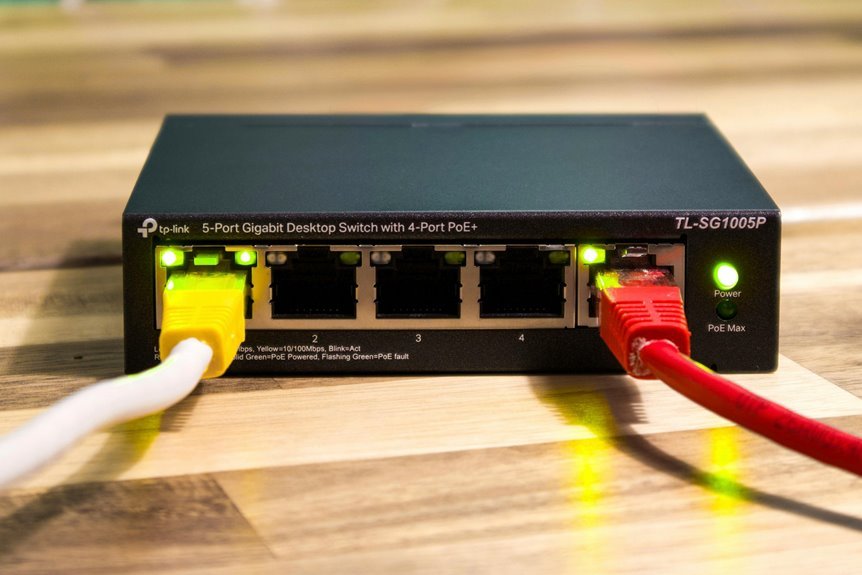
Secure Digital Network 570010 for Expansion

The Secure Digital Network 570010 for Expansion presents a modular, policy-driven backbone that unifies compute, storage, and networking. Its multi-site design emphasizes auditable configurations, governance, and disciplined risk assessment to avoid vendor lock-in. Deployment tooling promises auditable change control and rapid planning-to-execution cycles. Benchmarks aim to quantify performance, security, and cost across environments. Yet questions remain about interoperability, real-time telemetry, and the true cost of scale, leaving observers with reasons to scrutinize the framework further.
How the 570010 Enables Expansion Scales
The 570010 enables expansion scales by modularly aligning compute, storage, and networking resources through a unified backplane and standardized interfaces. It presents a methodical framework for scalability planning, emphasizing measured growth and predictable capacity.
Skeptical of vendor lock, the design foregrounds security governance, ensuring policy-enforced controls, auditable configurations, and disciplined risk assessment to sustain freedom without compromising resilience or interoperability.
Designing a Modular, Secure Network for Multi-Site Growth
Designing a modular, secure network for multi-site growth requires a disciplined approach to segmentation, standardized interfaces, and policy-driven control. The architecture emphasizes modular scalability, enabling independent site autonomy while preserving cohesive policy enforcement. Critical metrics rely on secure telemetry, ensuring verifiable state, anomaly detection, and auditable events. Skepticism remains toward vendor lock-in, demanding open protocols, verifiable provenance, and rigorous validation before deployment.
Accelerating Deployment With Streamlined Management Tools
Accelerating deployment with streamlined management tools hinges on reducing friction between planning and execution while preserving security and visibility.
The analysis remains skeptical, methodical, and data-driven, focusing on governance, automation reliability, and auditable change control.
Scaling strategies emerge as design constraints, not slogans, while threat modeling informs preemptive risk reduction.
Freedom-minded teams demand transparent tooling, verifiable outcomes, and disciplined, repeatable deployment workflows.
Performance, Security, and Compliance Benchmarks for Expansion
Performance, security, and compliance benchmarks for expansion require a rigorous, data-driven assessment of operational capacities, threat surfaces, and regulatory alignment. The evaluation emphasizes security benchmarks and measurable controls, not assumptions, to determine resilience. Skeptical analysis reveals gaps in expansion scalability, data integrity, and incident response. Objective metrics guide governance, cost, and performance trade-offs without compromising freedom or security posture.
Conclusion
The 570010 framework proves its strength in modular, policy-driven expansion across multi-site environments, delivering cohesive backplane interoperability and auditable configurations. While skeptics may doubt vendor-neutral interoperability, its standardized interfaces and secure telemetry substantiate cross-site governance and risk assessment. Although deployment tooling accelerates planning-to-execution, verifiable change control remains essential to avoid drift. In balance, the architecture offers scalable performance, rigorous security, and cost visibility—addressing both expansion needs and the scrupulous scrutiny of stakeholders.